Planning to study at an international university after Class 12? Your academic marks are important, but some universities also consider extracurricular activities, personal essays, projects, recommendations and standardised test scores as part of their admissions process.
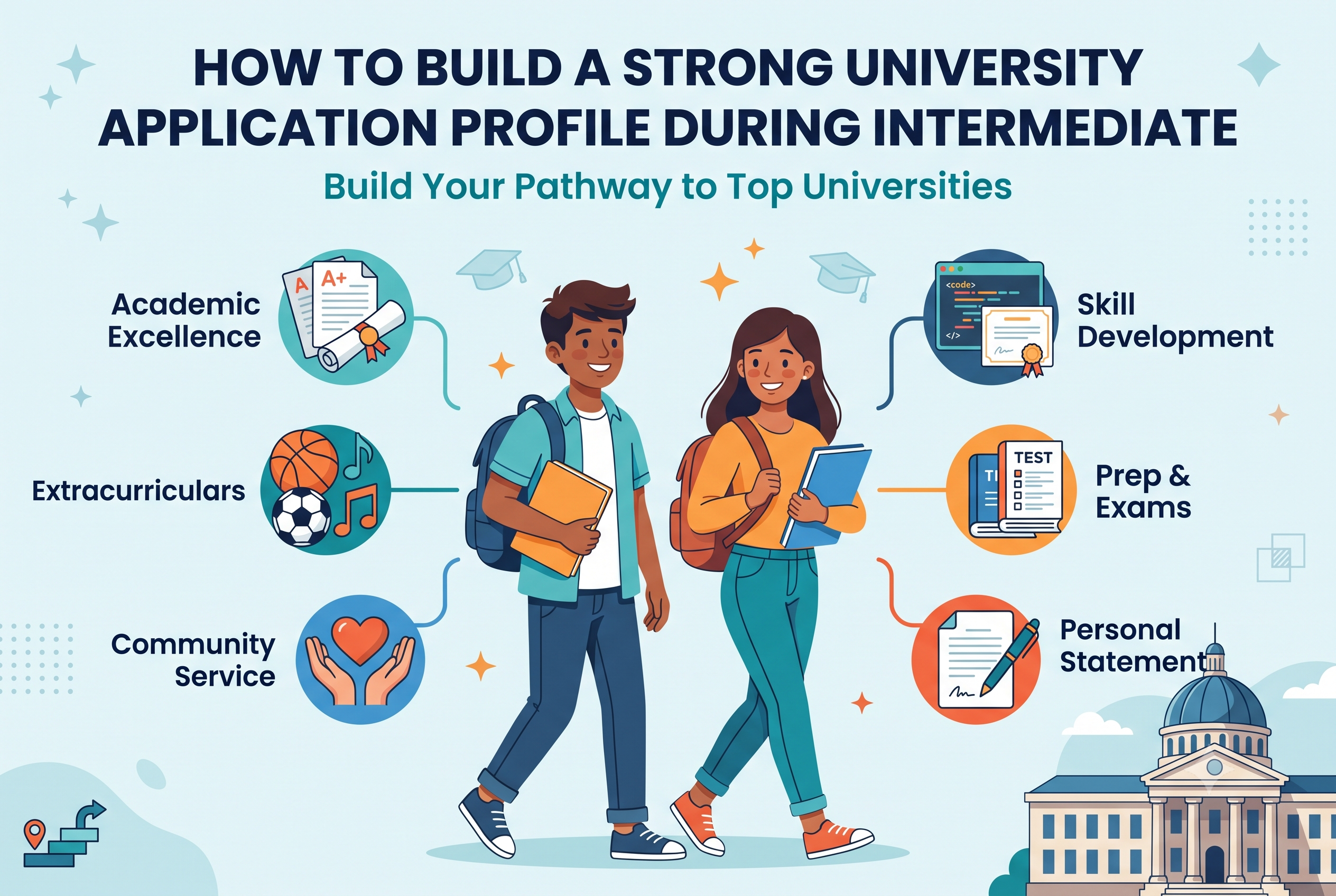
Understanding how to build a strong university application profile during Intermediate can help you prepare early and make informed decisions about your future. Students who begin planning in Class 11 have more time to explore their interests, improve their skills and research university requirements.
This guide explains how to develop a university application profile for students while managing Intermediate studies, exploring extracurricular opportunities and preparing for international admissions.
1. Maintain Strong Academic Performance
Academic performance is an important part of many university applications. Students should focus on understanding their subjects, completing assignments on time and maintaining consistent results throughout Intermediate.
For engineering and technology aspirants, mathematics and science fundamentals can be particularly important. Students interested in business or management can also develop analytical thinking, numerical ability and communication skills.
To strengthen your academic record:
- Follow a weekly study timetable.
- Revise difficult topics regularly.
- Track your academic progress.
- Seek help when you struggle with a subject.
- Balance entrance preparation with Intermediate examinations.
Students comparing Intermediate Colleges in Hyderabad should consider academic support, teaching quality, learning environment and how well a college’s timetable fits their future plans.
When evaluating the Best Junior College in Hyderabad, parents and students should also consider whether the academic programme aligns with the student’s intended university pathway.
2. Choose Extracurricular Activities That Reflect Your Interests
Extracurricular activities for university applications can help students demonstrate commitment, initiative, teamwork and leadership. However, the right activities depend on the student’s interests and the requirements of their target universities.
Examples include:
- Sports and fitness activities
- Debate and public speaking
- Coding and technology projects
- Music, dance and creative writing
- Community volunteering
- Entrepreneurship projects
- Environmental initiatives
You do not need to participate in every activity available. Choose opportunities that genuinely interest you and allow you to develop skills over time.
For example, an engineering aspirant could build a simple website, while a student interested in business could conduct a small market survey or develop a basic business plan.
Keep a record of your responsibilities, contributions and learning outcomes. This makes it easier to explain your activities when preparing a university application profile for students.
3. Develop Projects That Demonstrate Your Skills
Projects can help students apply classroom learning to practical situations. They also provide examples of curiosity, problem-solving and independent learning.
For engineering and technology students:
- Create a basic website or application.
- Explore beginner-level robotics.
- Build a simple data visualisation project.
- Participate in a science exhibition or coding challenge.
For business and management students:
- Develop a basic business plan.
- Study customer preferences through a small survey.
- Create a budget for a student-led event.
- Research how a business attracts customers.
For students interested in social impact:
- Participate in a community initiative.
- Organise an awareness activity.
- Explore an environmental problem.
- Document a project that benefits the local community.
Record what you worked on, the challenges you faced and what you learned. These details can help you prepare essays or discuss your interests during an interview, if required.
4. Improve English and Communication Skills
Strong communication skills can support students throughout the university application process. Depending on the institution, applicants may need to write essays, complete written responses, attend interviews or demonstrate English-language proficiency.
Develop these skills by reading quality articles, writing short summaries, participating in discussions and practising clear written communication.
Students preparing for the SAT can also work on reading comprehension, grammar and evidence-based reasoning.
Remember that SAT scores and English-language proficiency tests serve different purposes. Check the specific requirements of your target universities before registering for an examination.
5. Plan SAT Preparation Alongside Intermediate Studies
The SAT is accepted by some universities as part of undergraduate admissions, but it is not mandatory for every university. Requirements and testing policies vary by institution and admission cycle.
If you plan to apply to universities that consider the SAT, begin by reviewing their official admission requirements.
A practical SAT preparation for Intermediate students plan can include:
- Understanding the current SAT format.
- Taking a diagnostic practice test.
- Identifying strengths and weaker topics.
- Setting aside regular weekly practice time.
- Reviewing mistakes and taking timed practice tests.
Students exploring MPC with SAT in Hyderabad should look for an academic programme that helps them balance their Intermediate subjects with their preparation goals.
Similarly, students searching for MPC with SAT in Kompally should compare the curriculum, timetable, academic support and preparation arrangements before selecting a college.
At Ignite Junior College, students can enquire about the MPC + SAT programme and discuss how it fits their academic plans.
6. Learn to Write Effective University Application Essays
Some universities request personal essays or written responses to understand an applicant’s interests, experiences and goals.
Your essay does not need to describe a major award or extraordinary achievement. It can explain a genuine experience that helped you learn something important.
Possible topics include:
- A project that taught you persistence.
- A subject that inspired you to explore a career.
- A volunteering experience that changed your perspective.
- A challenge that helped you become more independent.
- An interest that developed into a meaningful project.
Use specific examples instead of generic statements. Write honestly, follow the word limit and ensure the final work reflects your own voice.
Not every university requires essays, so check the application instructions before preparing them.
7. Maintain a Record of Achievements
Organising your achievements early can make the application process easier.
Create a digital folder containing:
- Academic records and report cards
- Certificates and competition results
- Project summaries and samples of your work
- Leadership and volunteering experiences
- Relevant awards and accomplishments
- A record of skills developed
You can also maintain a spreadsheet with dates, activities, responsibilities and outcomes.
Include only accurate information and submit documents according to each university’s requirements.
8. Research Universities Before Applying
If your goal is to study abroad after Intermediate, research universities well before application deadlines.
Compare the following factors:
- Course structure and academic requirements
- Application deadlines
- SAT and other examination policies
- English-language proficiency requirements
- Tuition fees and living expenses
- Scholarships and financial aid
- Campus facilities and student support
Create a shortlist of universities and record their requirements in a spreadsheet. This helps you identify what you need to prepare and reduces the risk of missing deadlines.
For application guidance, refer to the Common App First-Year Application Guide and each university’s official admissions website.
9. Choose the Right Intermediate College for Your Goals
Your Intermediate years are an opportunity to strengthen academic fundamentals and prepare for future education. Choosing a suitable college can help you establish a consistent routine.
When comparing the Best Junior College in Hyderabad or looking for Intermediate Colleges in Hyderabad, consider:
- Academic quality and subject options
- Support for your intended career pathway
- Timetable and workload
- Availability of relevant entrance-exam preparation
- Faculty guidance and learning resources
- Communication with parents about academic progress
For students considering MPC with SAT in Hyderabad or MPC with SAT in Kompally, it is important to confirm the actual SAT preparation support offered by the institution instead of assuming every MPC programme includes it.
Explore Ignite Junior College to learn about its Intermediate programmes, and contact the college for further details.
Frequently Asked Questions
1. How to build a strong university application profile during Intermediate?
Maintain good academic performance, explore meaningful extracurricular activities, work on projects, develop communication skills and research university requirements early. Focus on activities relevant to your interests and intended course.
2. When should students start preparing to study abroad after Intermediate?
Class 11 is a useful time to explore universities, understand admission requirements and plan activities. Use Class 12 to refine your choices and complete applications according to each institution’s deadlines.
3. Is SAT preparation necessary for every student?
No. SAT requirements vary by university and admission cycle. Check the policies of your target institutions before deciding whether to take the examination.
4. Which extracurricular activities are useful for university applications?
Useful activities depend on the student’s interests and target course. Examples include sports, coding, volunteering, public speaking, creative projects and student leadership.
5. What should students consider when choosing an Intermediate college?
Consider academic quality, subject options, learning support, timetable, career goals and the specific entrance-preparation support available.
6. Does MPC with SAT guarantee admission to an international university?
No. An academic programme or SAT preparation cannot guarantee university admission. Each institution evaluates applicants according to its own eligibility criteria and selection process.
Conclusion
Learning how to build a strong university application profile during Intermediate requires planning, consistent academic effort and meaningful participation in activities beyond the classroom.
Whether you are preparing for the SAT, developing projects or exploring options to study abroad after Intermediate, start by understanding your goals and researching your target universities.
If you are looking for the Best Junior College in Hyderabad or comparing Intermediate Colleges in Hyderabad, evaluate each college based on your academic needs and future plans.
Planning your next step after Class 10? Visit Ignite Junior College or contact the admissions team to explore suitable Intermediate programmes.